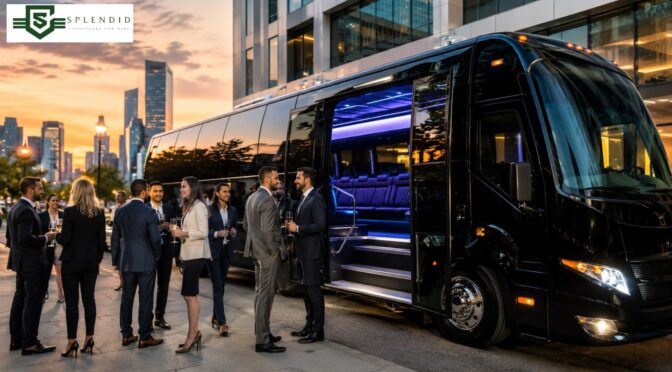
Corporate events do not always have to revolve around a conference room, hotel ballroom or formal dinner. A well-planned corporate party bus hire can turn the journey itself into part of the experience, giving colleagues a comfortable, social and organised way to travel between venues. Whether you are arranging an end-of-year celebration, client function, team-building activity or company milestone, the right vehicle can solve practical transport challenges while adding something memorable to the occasion. The key is choosing a bus, schedule and service arrangement that genuinely suit the event rather than hiring one simply because it looks impressive.
Why Consider a Party Bus for a Corporate Event?
Corporate event transport has a different set of requirements from ordinary group travel. Attendees may include senior executives, employees from different departments, clients or business partners, and everyone needs to arrive at the right place at the right time. Coordinating multiple private cars, taxis or rideshare vehicles can create unnecessary logistical problems, particularly when several venues are involved.
A party bus creates a central meeting point for the group. Instead of asking everyone to navigate independently, organisers can establish a common pickup location and predetermined schedule. This can make attendance easier to manage and reduce the risk of people getting lost, arriving late or having difficulty finding parking.
There is also a social advantage. A suitable vehicle provides a shared environment where colleagues can talk and relax during the journey. That can be particularly useful for teams who normally work across different locations or departments and have limited opportunities to interact outside their usual working environment.
The important distinction is that a corporate party bus should still be treated as transport first. Entertainment features can enhance the experience, but reliability, safety, seating capacity, driver arrangements and scheduling should remain the priorities.
What Types of Corporate Events Work Well?
A party bus can suit a surprisingly broad range of professional occasions when the itinerary is planned appropriately. It does not necessarily need to be a traditional “party”. The vehicle can simply provide comfortable group transportation between several activities.
Common examples include:
- End-of-year staff celebrations
- Corporate dinners
- Product launches
- Team-building activities
- Company milestone celebrations
- Awards evenings
- Client entertainment
- Conference transfers
- Sporting or cultural events
- Multi-venue corporate functions
- Employee appreciation events
For example, imagine a company arranging a three-part evening: employees meet at the office, travel to a restaurant for dinner, then continue to a theatre or entertainment venue before returning to the original pickup area. Organising separate transport for everyone could become complicated. A team celebration bus gives the organiser a straightforward way to keep the group together throughout the itinerary.
For client-facing occasions, however, the priorities may be slightly different. A quieter, refined vehicle with comfortable seating and a professional atmosphere may be more appropriate than a heavily entertainment-focused interior.
Party Bus Hire: What Should Businesses Look For?
When researching party bus hire, businesses should avoid making their decision based solely on photographs or the number of entertainment features advertised. A vehicle can look excellent online while being poorly suited to a particular group size or itinerary.
Start by determining how many people will actually travel. Do not select a vehicle based on its maximum advertised capacity without considering how the seating arrangement works in practice. If guests will be travelling for several hours, comfort becomes much more important than simply fitting everyone inside.
Match the Vehicle to the Corporate Group
Consider the nature of the event, rather than assuming every corporate function requires the largest or most elaborate vehicle available. A smaller group may benefit from a premium minibus-style environment, while a larger celebration may require substantially more capacity.
It is also sensible to establish whether everyone will travel together for the entire itinerary. If some attendees need to leave early or join at different locations, the transport plan may need additional flexibility.
Examine the Actual Vehicle
Before confirming a booking, ask for current vehicle information and clarify what is actually included. Useful questions include:
- What is the licensed passenger capacity?
- Is the quoted capacity based on seated passengers?
- What type of seating is provided?
- Is climate control available?
- How much luggage or equipment can be carried?
- Is the vehicle suitable for the planned route?
- Is a professional driver included?
- What happens if the vehicle develops a mechanical problem?
- Are there restrictions on food, drinks or decorations?
These questions may seem basic, but they can prevent unpleasant surprises on the day.
Limo Bus Hire Versus a Standard Party Bus
The terms limo bus hire and party bus are sometimes used interchangeably, although the actual vehicles and service styles can differ considerably between operators. Businesses should focus less on the label and more on the features, capacity and suitability of the vehicle being offered.
A limo-style bus may be particularly appropriate when the event has an executive or client-facing character. Comfortable seating, a polished interior and a quieter environment can support a more professional atmosphere.
A traditional party bus may place greater emphasis on entertainment, lighting, music and social interaction. That can work well for employee celebrations where the journey is intended to be part of the evening.
Neither option is automatically better. The correct choice depends on the purpose of the event, passenger expectations and itinerary.
How Corporate Event Transport Can Improve Event Logistics
Good corporate event transport is largely about reducing friction. Event organisers already have enough variables to manage, including catering, venue access, guest lists, timing and communications. Transport should simplify the day rather than create another complicated workstream.
A central vehicle can make timing easier to control. If the itinerary includes several locations, the driver can work from a predetermined schedule while the organiser focuses on the event itself. It can also reduce the number of vehicles arriving at venues, which may make passenger collection and drop-off more orderly.
For larger businesses, there is another benefit: consistency. When employees are given clear instructions about where and when to meet, there is less dependence on everyone arranging their own transport.
However, organisers should always build reasonable time buffers into the schedule. Traffic, venue access, road closures, passenger loading and unexpected delays can affect journey times. A professional transport plan should never assume that every transfer will take exactly as long as a standard navigation app predicts.
Company Event Travel Requires More Planning Than a Normal Booking
Company event travel often involves multiple stakeholders. An organiser may need to coordinate with management, employees, venues, transport providers and sometimes clients. This means the transport booking should be integrated into the overall event schedule rather than treated as an afterthought.
Create a simple itinerary containing:
- Primary pickup location
- Passenger meeting time
- Planned departure time
- Venue addresses
- Estimated arrival times
- Planned waiting periods
- Return journey details
- Emergency contact information
- Organiser’s contact details
Send the key information to attendees before the event. They should know where to meet, when to arrive and who to contact if circumstances change.
For multi-stop events, provide the transport provider with the complete itinerary rather than communicating each destination informally throughout the evening. Clear information reduces the likelihood of misunderstandings.
When Does Luxury Party Bus Hire Make Sense?
Luxury party bus hire can be worthwhile when the vehicle forms a meaningful part of the corporate experience. This might include a major company anniversary, executive celebration, premium client event or employee recognition evening.
The important question is not simply whether a luxury vehicle looks impressive. Consider whether the additional features actually contribute to the event. If attendees will spend two or three hours travelling together, upgraded seating, climate control, interior presentation and onboard facilities may have genuine practical value.
On the other hand, if the journey is only 15 minutes between two nearby venues, spending significantly more on a luxury specification may provide little additional benefit.
An experienced organiser should therefore assess value rather than appearance. The best transport choice is the one that improves the guest experience while remaining proportionate to the event budget.
Private Party Bus Rental: What Should Be Confirmed?
A private party bus rental can provide an important advantage for corporate groups because the vehicle is reserved for the booking rather than being shared with unrelated passengers. This allows the organiser to control the passenger list and maintain a consistent environment throughout the journey.
Before booking, confirm exactly what “private” means under the provider’s terms. Ask whether the vehicle is exclusively allocated to your group for the entire booked period and whether additional charges apply for extended waiting time or itinerary changes.
Also confirm the cancellation, rescheduling and overtime policies. Corporate schedules can change because of venue delays, weather, client requirements or changes to attendance. Understanding the terms before paying a deposit is much easier than negotiating them when an unexpected situation occurs.
Hire a Party Bus Only After Checking These Practical Details
The decision to Hire a Party Bus should come after the event requirements have been established, not before. Start with passenger numbers, locations, timings and the desired atmosphere. Then compare vehicles against those requirements.
A useful booking checklist includes:
- Confirmed passenger numbers
- Appropriate vehicle capacity
- Professional driver arrangements
- Pickup and drop-off locations
- Complete itinerary
- Total hire duration
- Included amenities
- Additional fees
- Cancellation conditions
- Payment schedule
- Contact details for the day
- Emergency or breakdown procedures
If the event involves alcohol, also check the operator’s rules before making assumptions about what passengers can bring or consume onboard. Policies vary between providers and locations, so written confirmation is preferable.
Common Corporate Party Bus Mistakes to Avoid
One common mistake is booking too close to the event date. Popular dates, particularly around major corporate celebration periods, can have limited vehicle availability. Starting the search earlier provides more choice and gives organisers time to compare specifications.
Another mistake is overestimating capacity. A bus advertised for a particular number of passengers may technically accommodate that number but not provide the level of comfort expected for a longer corporate journey.
It is also easy to underestimate travel time. An itinerary that looks manageable on paper can become stressful when traffic, parking, loading and venue access are considered. Build realistic buffers into the schedule.
Finally, do not assume that a visually impressive vehicle automatically indicates a reliable operator. Check the provider’s experience, booking terms, vehicle information, driver arrangements and customer feedback where available. Professional presentation should be supported by dependable service.
Expert Tips for a Smooth Team Celebration Bus Experience
One practical approach is to appoint a single transport coordinator for the event. This person can communicate with the driver, handle last-minute passenger questions and notify the group if the schedule changes. It prevents several people from giving conflicting instructions.
It is also helpful to create a passenger list before departure. For larger groups, confirm that everyone has arrived before leaving each major pickup point. This simple measure can prevent delays and avoids the uncomfortable situation of discovering that a passenger has been left behind.
For executive or client events, consider the atmosphere carefully. Loud music and extensive entertainment may be appropriate for a staff celebration but less suitable for a business dinner involving important clients. The transport environment should complement the event rather than compete with it.
Most importantly, communicate expectations in advance. Guests should understand the itinerary, pickup arrangements and any relevant vehicle policies before they board.
Conclusion: Is a Party Bus Right for Your Corporate Event?
So, can you hire a party bus for a corporate event? Absolutely, when the vehicle and service are selected around the actual needs of the occasion. A well-planned Hire a Party Bus experience can simplify group transportation, support a smoother itinerary and create an enjoyable shared journey without compromising the professional nature of the event. The strongest decisions come from evaluating capacity, comfort, reliability, timing, policies and passenger expectations rather than choosing a vehicle based purely on appearance.
For businesses considering corporate party bus hire, Splendid Party Bus Hire can be considered as part of the research process when comparing transport options for a company function. The most useful starting point is to establish your passenger numbers, itinerary and event style before discussing vehicle options.
Whether the occasion involves a team celebration, executive gathering or multi-venue function, Splendid Party Bus Hire can help businesses assess transport around the practical requirements of the event. A thoughtful approach to planning allows the journey to become a positive part of the corporate experience while keeping logistics, comfort and reliability firmly in focus.
FAQs
1. Can a party bus be used for a formal corporate event?
Yes. A party bus can work for formal corporate occasions when the vehicle and atmosphere are matched to the event. For executive dinners, client functions or awards evenings, a refined vehicle with comfortable seating may be more appropriate than a highly entertainment-focused bus. The key is to consider the guest profile, journey length and purpose of the event before selecting the vehicle.
2. How far in advance should a company book a party bus?
There is no universal booking deadline because availability depends on location, vehicle size, season and event date. However, corporate organisers benefit from booking early, particularly for end-of-year functions and popular celebration periods. Early planning also provides time to confirm passenger numbers, compare vehicles, review cancellation conditions and coordinate the transport schedule with venues.
3. Is a party bus suitable for transporting corporate clients?
It can be, provided the vehicle offers the appropriate level of comfort and professionalism. Client transportation should prioritise punctuality, cleanliness, seating comfort and a suitable atmosphere. Before booking, organisers should inspect current vehicle information and clarify the service arrangements rather than assuming that every party bus is designed for executive travel.
4. What should a company include in the transport itinerary?
The itinerary should include pickup points, passenger meeting times, departure times, destinations, planned waiting periods and return arrangements. It should also identify the event organiser and provide a reliable contact method. For multi-stop corporate events, include realistic time buffers for traffic, passenger loading and venue access. Sharing the itinerary with both attendees and the transport provider can significantly reduce confusion.
5. What is the biggest mistake companies make when arranging event transport?
One of the biggest mistakes is treating transport as an afterthought. When a company waits until the rest of the event has been organised, suitable vehicles may be unavailable and the remaining options may not fit the schedule or budget. Transport should be planned alongside the venue and event timetable so capacity, timing, passenger needs and contingency arrangements can all be considered properly.