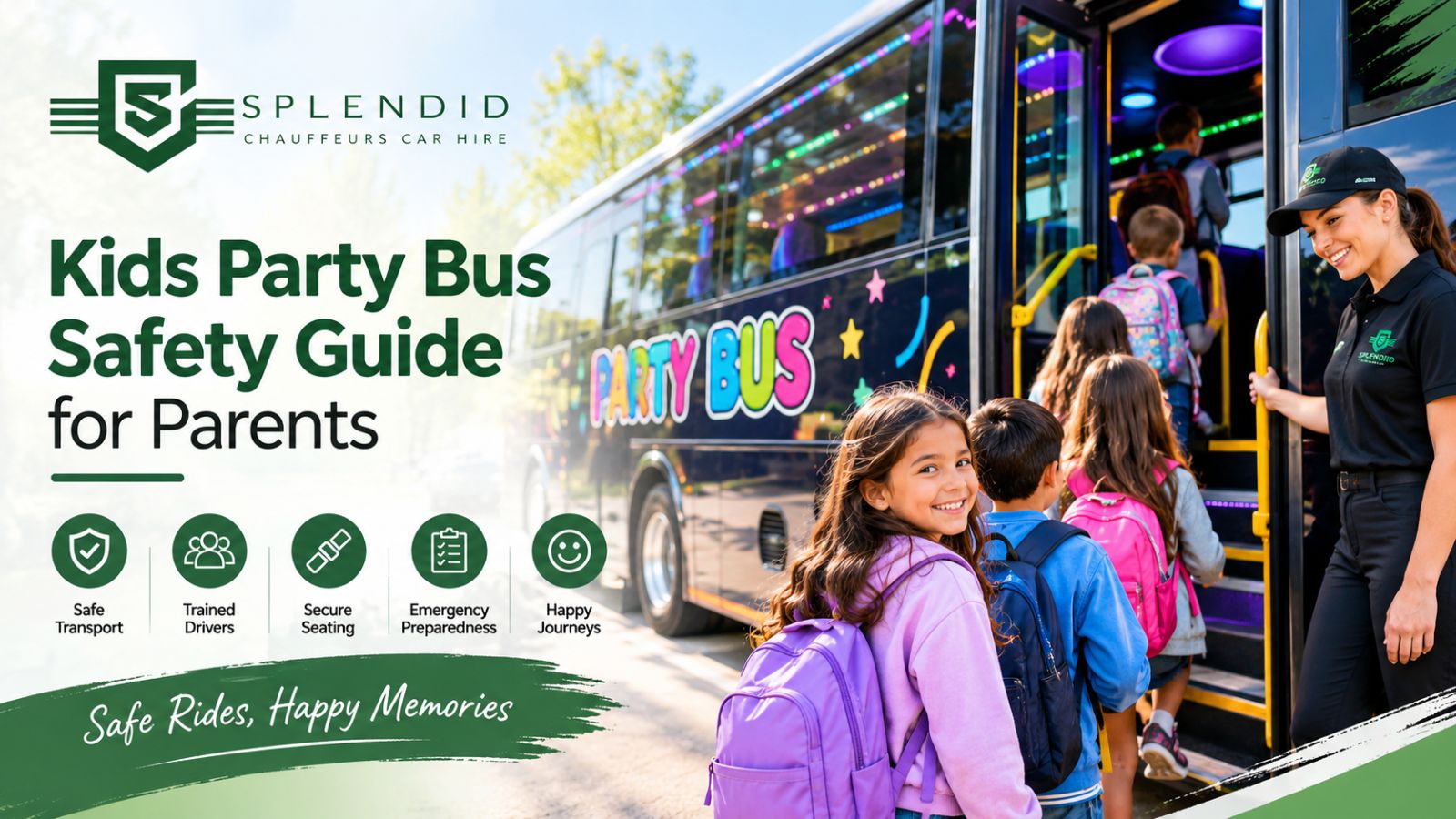
A party bus can turn a birthday, school celebration or special outing into an exciting experience for children. But when young passengers are involved, the first question should always be safety. Before booking kids party bus hire, parents need to understand how the vehicle is operated, who is responsible for supervision, what safety equipment is available and how children will be managed during the journey.
A fun vehicle is not automatically a safe one. Good planning matters just as much as entertainment. This Kids Party Bus Safety guide explains what parents should check before booking, what to ask the operator, how adults can supervise children and which warning signs should not be ignored.
Transporting children is different from transporting a group of adults. Children may become excited, move around more frequently, forget instructions or become distracted by music and entertainment. A party environment can therefore create additional challenges compared with an ordinary passenger journey.
Parents should think about the entire experience rather than focusing only on the vehicle’s appearance. Safety starts before the bus arrives and continues until every child has been collected or returned to the agreed location.
Important considerations include:
A responsible operator should be comfortable answering questions about these areas. Parents should never feel that asking safety questions is unnecessary or inconvenient.
Secure event transport for children should involve more than simply booking a large vehicle. The operator, driver, parents and supervising adults all have different responsibilities. Understanding those responsibilities before the event can prevent confusion on the day.
For example, the driver should be responsible for operating the vehicle safely and following applicable transport regulations. Parents or designated supervisors should remain responsible for children’s behaviour and welfare unless a specific arrangement says otherwise.
This distinction is important. A driver cannot safely concentrate on traffic while simultaneously supervising a group of excited children in the passenger area.
Never assume that a bus can safely carry as many children as physically fit inside it.
Ask the operator for the vehicle’s permitted passenger capacity and explain the actual number and ages of the children travelling. If adults will accompany them, include those adults in the passenger count.
A vehicle that feels spacious when empty may become crowded when children, adults, bags, gifts and entertainment equipment are added.
Capacity should be based on the vehicle’s legal and operational limits, not on how many people can squeeze into available space.
One of the most important checks involves the driver and operator.
Parents should ask whether the company and driver meet the licensing, accreditation and other legal requirements applicable to the type of passenger transport being provided in their area. Requirements can vary considerably by jurisdiction, vehicle type and passenger capacity.
Before confirming a booking, parents can ask:
A reputable provider should be able to explain its procedures clearly without making vague claims.
Parents should also remember that a company’s marketing materials are not a substitute for checking relevant licensing or regulatory information where that information is publicly available.
Child safety transport requires particular attention to seating and restraint requirements.
The rules governing child restraints, seat belts and passenger seating can differ depending on where the journey takes place and what type of vehicle is being used. A party bus may not have the same seating configuration as a standard passenger car, so parents should not assume that ordinary car-seat rules automatically apply in exactly the same way.
Before travelling, ask the operator:
If a child requires a particular restraint because of age, size or individual needs, discuss this with the operator before booking rather than improvising on the day.
A common misconception is that children can move around a party bus because it is designed for parties.
The safety requirements of a moving vehicle still apply. Children should follow the operator’s instructions about remaining seated or staying in designated areas while the vehicle is moving.
Parents should establish this expectation before boarding. It is much easier to manage behaviour when children already know the rules.
A school party bus or similar group outing requires particularly careful coordination because there may be many children travelling together.
Schools, childcare organisations and community groups should establish who is responsible for supervision before the journey begins. One adult should not be expected to supervise an entire group without considering the children’s ages, needs and the size of the vehicle.
Before departure, supervising adults should know:
For larger groups, a simple roll-check system can be useful. Children can be counted before departure, after every scheduled stop and again when they leave the vehicle.
This basic procedure can prevent avoidable mistakes.
If possible, parents or organisers should inspect the vehicle before the event.
You do not need to be a mechanic to notice obvious concerns. Look at general cleanliness, visible damage, passenger seating, flooring, handrails, doors and emergency exits.
Ask where emergency equipment is located and how passengers would exit if the normal doors could not be used.
LED lighting, music systems, screens and other entertainment features may be attractive to children, but they should not distract parents from fundamental safety considerations.
The entertainment equipment should be properly installed and should not obstruct exits, create trip hazards or interfere with the driver’s operation of the vehicle.
A visually impressive interior is not evidence of good safety management.
Many transport incidents can occur around vehicles rather than while the vehicle is moving.
Children can become distracted when boarding, particularly when they are excited and surrounded by friends. Parents should establish a clear boarding procedure before the bus arrives.
Children should wait in a safe location away from traffic until instructed to board.
At the destination, adults should ensure children do not immediately run into a car park, roadway or crowded public area.
A good pick-up location should provide sufficient space for children to gather away from moving traffic.
If possible, avoid locations where children would need to cross a busy road immediately after leaving the vehicle.
Parents should also confirm exactly where the vehicle will stop. A vague instruction such as “outside the venue” can create confusion at a busy location.
A specific meeting point makes supervision easier.
Food and drinks can introduce additional safety considerations.
Parents should inform the operator about allergies or dietary requirements where relevant, but they should not assume that the transport provider is responsible for managing medical conditions.
Children should also be encouraged to eat and drink appropriately while travelling. Loose objects, open containers and messy foods can create additional hazards inside a moving vehicle.
If the party includes games or activities, choose those that can safely be performed within the available passenger area. Avoid activities involving sharp objects, projectiles or anything that could obstruct walkways.
Even when everything is carefully organised, unexpected situations can happen.
A vehicle may experience a mechanical issue. Traffic may cause a significant delay. A child may become sick. Weather may affect the planned route. A venue may become unavailable.
Parents should therefore know the operator’s emergency procedures before the journey.
The supervising adults should have:
For children’s events, emergency contact information should be accessible without exposing sensitive information unnecessarily.
Parents often focus heavily on choosing the vehicle and entertainment package while overlooking operational details.
Some common mistakes include:
A modern interior may look impressive, but appearance does not tell you whether the operator follows appropriate safety procedures.
Always provide an accurate number of children and adults. Do not make assumptions based on the vehicle’s apparent size.
The driver needs to concentrate on driving. Parents or designated adults should provide child supervision.
If a child has mobility, behavioural, medical or seating requirements, discuss them before the booking is finalised.
A party itinerary with no allowance for traffic or delays can create unnecessary pressure. Build realistic travel time into the plan.
From a practical planning perspective, one of the easiest ways to improve safety is to make expectations clear before children board.
Tell children in advance that the vehicle is still a moving vehicle, even though it is being used for a party. Explain simple rules such as staying in the designated seating area, keeping aisles clear, listening to adults and following the driver’s instructions.
For younger children, keep instructions short and specific.
For example:
“Stay in your seat while the bus is moving.”
is easier for a young child to understand than a long list of transport rules.
Another useful approach is to appoint one or more adults as dedicated supervisors. Those adults should avoid becoming distracted by photography, food preparation or social conversations.
When comparing a children party bus rental provider, parents should look at the complete service rather than selecting an option solely because it has the lowest price.
Consider the operator’s experience, vehicle suitability, licensing information, insurance, safety procedures, communication, cancellation policy and emergency arrangements.
It is reasonable to ask detailed questions before making a booking. In fact, clear answers can help parents understand how seriously the provider approaches children’s transport.
A useful pre-booking discussion should establish:
Keeping these details in writing can also reduce misunderstandings later.
Before the event, use this quick checklist:
Before booking
Before departure
During the journey
At drop-off
A successful children’s party transport experience should be exciting without compromising basic passenger safety. The best preparation starts before the booking is made. Check the operator, understand the vehicle, confirm capacity and seating, clarify supervision responsibilities and create a simple plan for boarding, travelling and returning children safely.
Kids Party Bus Safety is ultimately a shared responsibility between the transport operator, driver, parents and supervising adults. Taking a few extra minutes to ask detailed questions can make the event easier to manage and help parents feel more prepared.
For families considering kids party bus hire, Splendid Party Bus Hire can be included in the comparison process. Parents can discuss passenger numbers, vehicle arrangements, safety procedures and event requirements directly with the provider before confirming a booking.
The goal should always be straightforward: choose transport that suits the children’s needs, meets applicable requirements and allows everyone to enjoy the celebration with sensible safety planning in place.
Safety depends on the specific vehicle, operator, journey and applicable transport requirements. Parents should confirm passenger capacity, seating arrangements, restraints, driver qualifications and supervision procedures before booking. Young children may also require additional supervision because they can be more likely to move around or become distracted. The operator should be able to explain how children are expected to remain safe while the vehicle is moving.
For many children’s events, having responsible adults present is a sensible approach, particularly when young children are travelling. The driver is responsible for operating the vehicle and cannot simultaneously provide active child supervision. Parents or designated adults can monitor behaviour, help with seating, respond if a child feels unwell and conduct headcounts. The appropriate number of supervising adults depends on the children’s ages, group size and individual needs.
It depends on the vehicle, seating configuration and applicable local requirements. Parents should never assume that a car seat can simply be installed on any party bus seat. Ask the operator whether child restraints are permitted, required or compatible with the vehicle before travelling. If a child normally requires a particular restraint, discuss the situation in advance and follow the applicable legal and manufacturer requirements.
Ask about licensing, insurance, passenger capacity, vehicle inspections, maintenance, driver qualifications, seating, restraints, emergency procedures and cancellation arrangements. You should also provide accurate information about passenger numbers, children’s ages, luggage, special requirements and the proposed route. A provider should give clear answers rather than relying only on general statements about being “safe” or “family-friendly”. Written booking details can help ensure that everyone understands the arrangements.
One of the most common planning mistakes is treating a party bus primarily as an entertainment venue instead of a passenger vehicle. Music, lighting and activities can make the experience enjoyable, but children still need to follow transport safety rules. Parents should establish expectations before boarding, provide appropriate supervision and make sure children understand that they must follow the driver’s instructions while the vehicle is moving.
We boast competitive rates whilst at the same time delivering a high class service. We cater for weddings, prom nights, corporate events and other special occasions. Over the years we have completed 100’s of weddings of different faiths and our business is based on our customer’s recommendations.